Energy Royalties in Western Canada: What They Are and Why They Matter
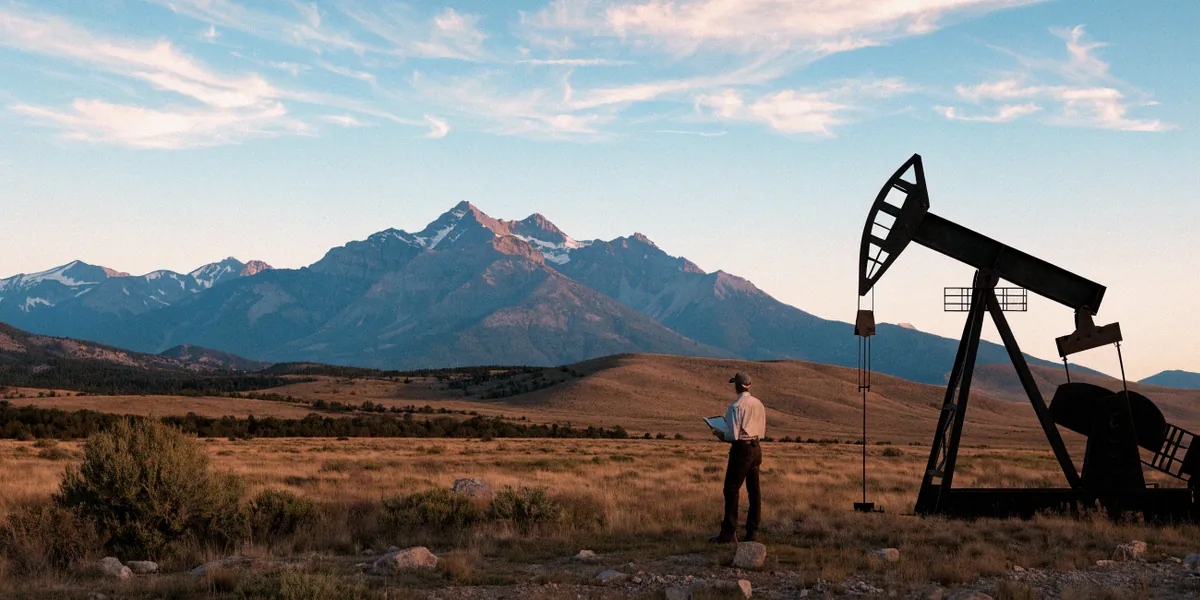
Every time you drive past a pumpjack outside Drayton Valley or see a natural gas plant glowing on the horizon near Fort St. John, there’s a quiet financial transaction happening in the background. That transaction — the energy royalty — helps pay for the roads you’re driving on, the schools your kids attend, and the hospitals that serve your community. When royalty rates shift, provincial budgets feel it, drilling crews feel it, and eventually, so do taxpayers. Our goal here is simple: explain how energy royalties actually work in Western Canada, without burying you in policy jargon or corporate-speak. Whether you’re a landowner curious about the cheque in your mailbox or just someone trying to understand the evening news, this is the plain-language version.
The Basics of Energy Royalties in Western Canada

Royalties are the payments energy companies make to the Crown — meaning the provincial governments — for the right to extract resources that belong to the public. In Western Canada, that means Alberta, Saskatchewan, and British Columbia each run their own royalty systems, and the rates vary wildly depending on what’s being pulled out of the ground and how expensive it is to get it.
What Exactly Is a Royalty?
Think of it as rent. The oil, gas, and minerals under the ground are owned by the people of the province, and companies pay for the privilege of extracting and selling them. Royalties can be calculated as a percentage of revenue, a fixed dollar amount per barrel or per thousand cubic feet, or a formula that shifts with commodity prices. They’re distinct from taxes — royalties pay for the resource itself, while taxes fund general government operations.
Who Owns the Resources?
Roughly 80% of mineral rights in Alberta are owned by the province, with the remainder held by the federal government (mostly in national parks) or by private landowners who received title before the province took control in 1930. Saskatchewan and BC have similar Crown ownership structures. This is why premiers talk about royalties the way a landlord talks about rent — it’s public money from public assets.
How Royalty Rates Are Set
Rates aren’t plucked from thin air. They’re set through legislation and periodic reviews that weigh three competing priorities:
- Public return: Making sure Albertans, Saskatchewanians, and British Columbians get fair value for resources that can only be extracted once.
- Industry competitiveness: Rates that are too high drive investment to Texas, North Dakota, or overseas.
- Cost recovery: Companies can deduct some costs before royalties are calculated, which acknowledges that extracting from the oil sands is far more expensive than conventional drilling.
Alberta Oil: The Heart of the Royalty Debate
No province has spent more political energy arguing about royalties than Alberta. The province’s oil sands and conventional oil sectors operate under different rules, and when the Modernized Royalty Framework (2017) came into effect, it represented the biggest overhaul in decades.
Oil Sands vs. Conventional Oil Royalties
Conventional oil — the stuff that flows from wells drilled into formations like the Cardium or Viking — has relatively low extraction costs, so royalties kick in earlier and at higher rates. Oil sands projects, by contrast, require massive upfront capital. Companies like Suncor and Canadian Natural Resources Limited (CNRL) spend billions building mines and in-situ facilities before a single barrel is sold. That’s why oil sands royalties are structured around project payout: the province takes a smaller share until companies recover their initial investment, then rates rise.
The Modernized Royalty Framework
Introduced in 2017, the Modernized Royalty Framework replaced the old “bitumen royalty” and “conventional oil royalty” systems with a single framework built around a drill-to-payout concept. For conventional wells, a minimum royalty applies from day one, with higher rates once a well reaches payout. For oil sands, the framework introduced a “revenue-minus-cost” approach for in-situ projects and simplified the calculation for mining operations. The goal was to make Alberta more predictable for investors while still capturing a fair return for the province.
Drilling and Production Incentives
Alberta also uses royalty incentives to encourage activity during downturns. Programs like the Oil and Gas Exploration Expense and various drilling credits reduce royalties for companies that drill new wells or explore in underdeveloped areas. These incentives are controversial — critics argue they give away revenue the province needs, while supporters say they keep rigs working and paycheques flowing in places like Grande Prairie and Lloydminster.
Waterflood and Enhanced Oil Recovery: Royalty Implications
Not all oil comes out of the ground on its own. In fact, most of it doesn’t. That’s where waterflood and enhanced oil recovery (EOR) come in, and these techniques have their own royalty quirks.
How Waterflood Projects Are Treated
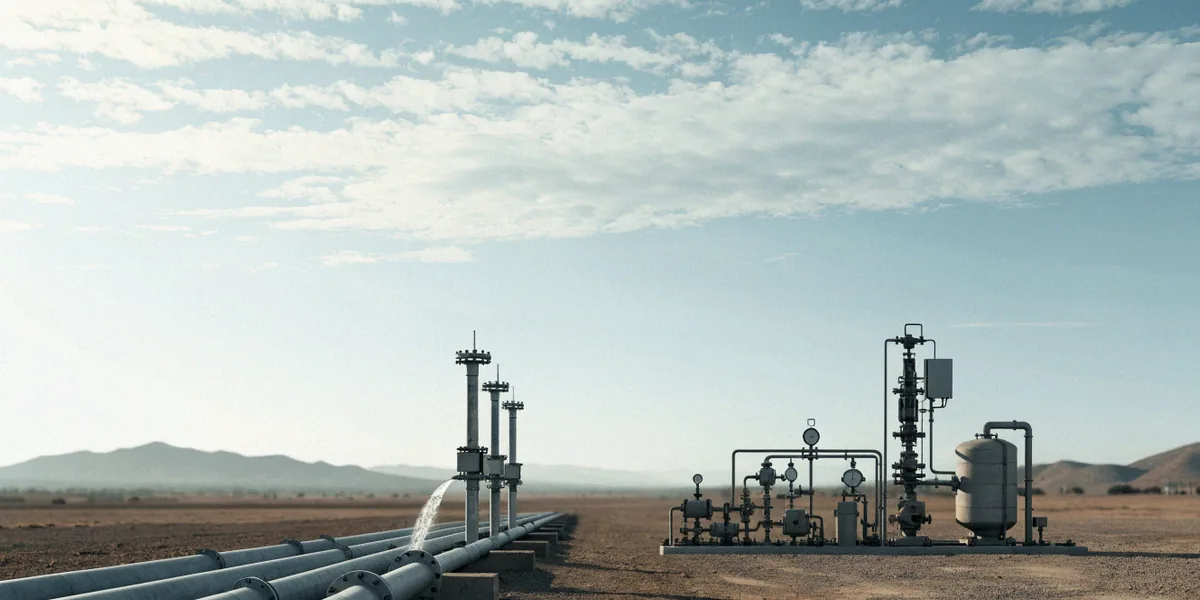
A waterflood is exactly what it sounds like: injecting water into a reservoir to push oil toward producing wells. It’s been used in Western Canada since the 1950s and is responsible for a huge share of Saskatchewan and Alberta production. Royalty-wise, waterflood projects are treated as conventional production, but companies can deduct the costs of injection wells, water handling, and facility upgrades before royalties are calculated. This makes waterflood economically viable in fields that would otherwise be shut in.
Royalty Adjustments for EOR
Enhanced oil recovery goes further — using CO2, polymers, or steam to coax out oil that water alone can’t reach. Because EOR is expensive, provinces offer royalty adjustments. In Alberta, EOR projects may qualify for reduced rates or royalty credits under specific programs. Saskatchewan has its own EOR royalty framework that recognizes the higher costs and technical risk involved. The logic is straightforward: without these adjustments, the oil would stay in the ground forever, and the province would get nothing.
Case Study: Weyburn CO2 EOR
The Weyburn CO2 EOR project in southeastern Saskatchewan is one of the world’s largest and longest-running CO2 enhanced oil recovery operations. Since 2000, CO2 captured from a coal gasification plant in North Dakota has been piped north and injected into the Weyburn field, boosting recovery and permanently storing carbon underground. For royalty purposes, Weyburn operates under Saskatchewan’s EOR framework, which balances the province’s revenue needs against the significant costs of CO2 purchase, transportation, and monitoring. It’s a useful example of how royalty policy can align with emissions reduction goals — at least in theory.
Natural Gas and NGL Royalties: A Different Ballgame
Natural gas and natural gas liquids (NGLs) follow different royalty rules than oil, and the rise of LNG Canada has put those rules under a spotlight.
BC’s Natural Gas Royalty Regime
British Columbia’s royalty system for natural gas is built around a net-profit approach for deeper wells and a gross-revenue approach for shallower ones. The province also offers deep-well credits and infrastructure credits to encourage development in the Montney formation, which stretches across northeastern BC and into Alberta. These credits reduce royalties in the early years of a project, when companies are spending heavily on drilling and pipelines.
Alberta NGL and Condensate Rules
In Alberta, NGLs — ethane, propane, butanes, and condensate — are treated separately from dry natural gas. Condensate, a light liquid that’s mixed with bitumen to allow it to flow through pipelines, is particularly valuable and carries its own royalty rate. This matters because condensate demand from the oil sands is enormous, and how it’s taxed affects both the oil sands operators and the gas producers who supply it.
LNG Canada and Future Royalty Revenue
LNG Canada, the liquefied natural gas export terminal under construction in Kitimat, BC, is expected to generate significant royalty revenue once it’s operational. The project is fed by gas from the Montney and other northeastern BC formations. For the province, LNG Canada represents a chance to turn stranded gas into long-term royalty income — but only if the royalty regime remains competitive with other jurisdictions like Qatar and the US Gulf Coast.
Energy Transition and the Future of Royalties
The energy transition isn’t just a phrase in policy papers — it’s actively reshaping how provinces collect and spend royalty dollars.
Carbon Pricing and Royalty Credits
Federal carbon pricing applies to industrial emitters, including oil and gas producers. Some provinces have designed royalty credits that offset carbon costs for companies investing in emissions-reduction technology. Alberta’s Technology Innovation and Emissions Reduction (TIER) system, for example, allows companies to earn credits for reducing emissions, and those credits can interact with royalty calculations. It’s a complicated dance, but the intent is to keep production competitive while cutting emissions.
Royalties as a Tool for Transition
Royalty revenue is increasingly being directed toward clean energy projects. Alberta’s Oil Sands Emissions Cap, introduced in 2016, limits emissions from oil sands operations and has spurred investment in carbon capture, hydrogen, and geothermal. Some of that investment is funded indirectly through royalty dollars that flow into provincial coffers and then into diversification programs. Whether this is enough to meaningfully accelerate the transition is a matter of ongoing debate.
What Happens to Orphan Wells?
When companies go bankrupt and abandon their wells, the cost of cleanup falls to the public. Orphan well associations in Alberta, Saskatchewan, and BC are funded partly by industry levies and partly by government — and that government money often comes from royalty revenue. It’s a reminder that royalties aren’t just about income; they’re also about managing the long-term liabilities of resource extraction.
Why Royalties Matter to Every Canadian
Royalties aren’t an abstract policy issue. They show up in your daily life, whether you realize it or not.
Funding Public Services
In Alberta, royalty revenue flows into general revenue and, historically, into the Alberta Heritage Savings Trust Fund — a sovereign wealth fund established in 1976 to save a portion of resource revenue for future generations. Saskatchewan deposits royalties into its general revenue fund, which pays for healthcare, education, and infrastructure. BC uses natural gas royalties to fund provincial programs and, in some years, to balance the budget. When commodity prices crash, these revenues dry up, and provinces either cut spending, raise taxes, or borrow.
Impact on Local Communities
In towns like Weyburn, Lloydminster, and Fort Nelson, royalties mean jobs. They fund the municipal infrastructure that supports drilling crews, the schools that educate their kids, and the hospitals that treat their injuries. When royalty rates change or commodity prices fall, these communities feel it first — layoffs, empty rental units, and shuttered businesses.
The Debate Over Royalty Rates
There’s no consensus on what a “fair” royalty rate looks like. Industry argues that high rates discourage investment and push capital to other jurisdictions. Critics counter that provinces have been too generous, especially during boom years, and that public resources have been undervalued. The truth is probably somewhere in between, and it depends on factors like commodity prices, extraction costs, and global demand. What’s clear is that royalty policy is never neutral — it always creates winners and losers.
FAQ
Do I pay royalties on oil and gas produced on my private land?
If you own the mineral rights beneath your land — which is rare in Western Canada outside of certain historical land grants — you may be entitled to a royalty from the company that extracts those resources. In most cases, the Crown owns the minerals, and the province collects the royalty.
How often do royalty rates change in Alberta?
Royalty rates are set by legislation and can change when the government introduces a new framework, like the Modernized Royalty Framework in 2017. Smaller adjustments, such as incentive programs, can happen more frequently through regulation.
Are royalties the same as taxes?
No. Royalties are payments for the right to extract publicly owned resources. Taxes are payments on income, property, or consumption. Companies pay both, and the two are calculated separately.
What is the Alberta Heritage Savings Trust Fund used for?
The fund was created to save a portion of Alberta’s non-renewable resource revenue for future generations. Investment income from the fund is transferred to the province’s general revenue each year to support public services.
Does CO2 EOR qualify for royalty reductions in Saskatchewan?
Yes. Saskatchewan’s royalty framework includes provisions for enhanced oil recovery projects, including CO2 EOR, that recognize the higher costs and technical complexity involved. The Weyburn project operates under this framework.
Understanding energy royalties is about more than following the news cycle — it’s about knowing how public resources turn into public services, and who benefits when they do. The system is complex, imperfect, and constantly evolving, but it’s not impenetrable. We hope this breakdown gives you a clearer picture of how royalties work in Western Canada, why they matter to your community, and what’s at stake as the energy transition unfolds. Royalties aren’t just numbers on a spreadsheet — they’re the quiet link between what’s under the ground and what’s built on top of it.


Post Comment