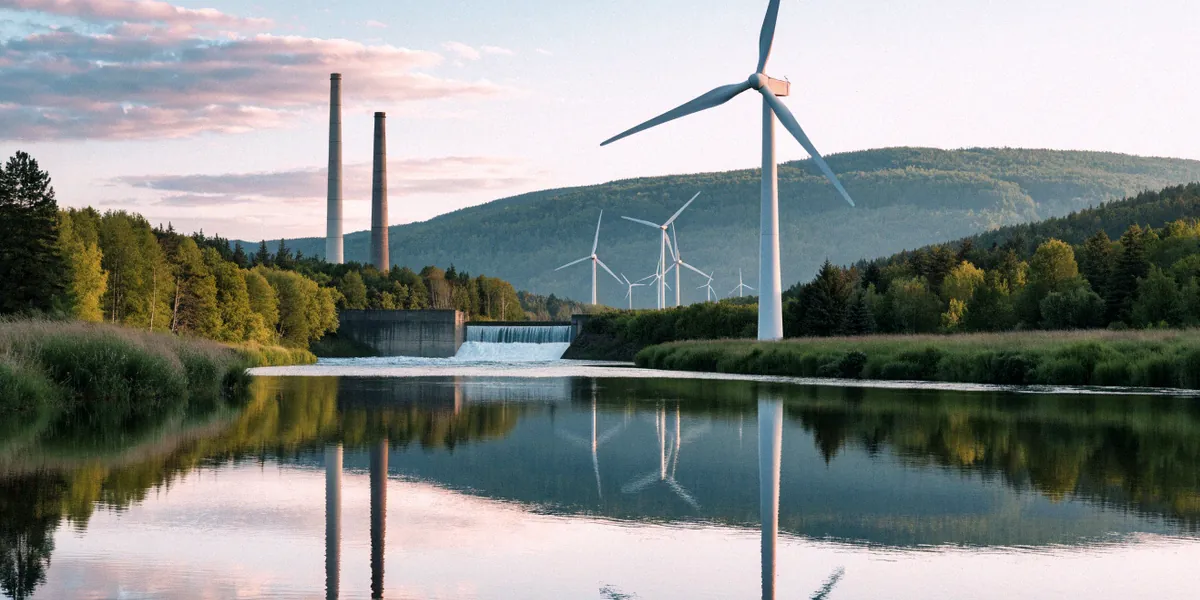
Canada’s Energy Mix at a Glance: What We Actually Use and Why It Matters
Here’s a statistic that surprises most people: Canada is the sixth-largest energy producer in the world, yet we’re also one of the highest per-capita energy consumers on the planet. That tension — huge production, huge consumption, and a hard deadline on emissions — is the whole energy transition in a nutshell. And it’s why enhanced oil recovery, a technique most Canadians have never heard of, still quietly matters to our economy, our grid, and our climate math.
The Big Picture: What Powers Canada?
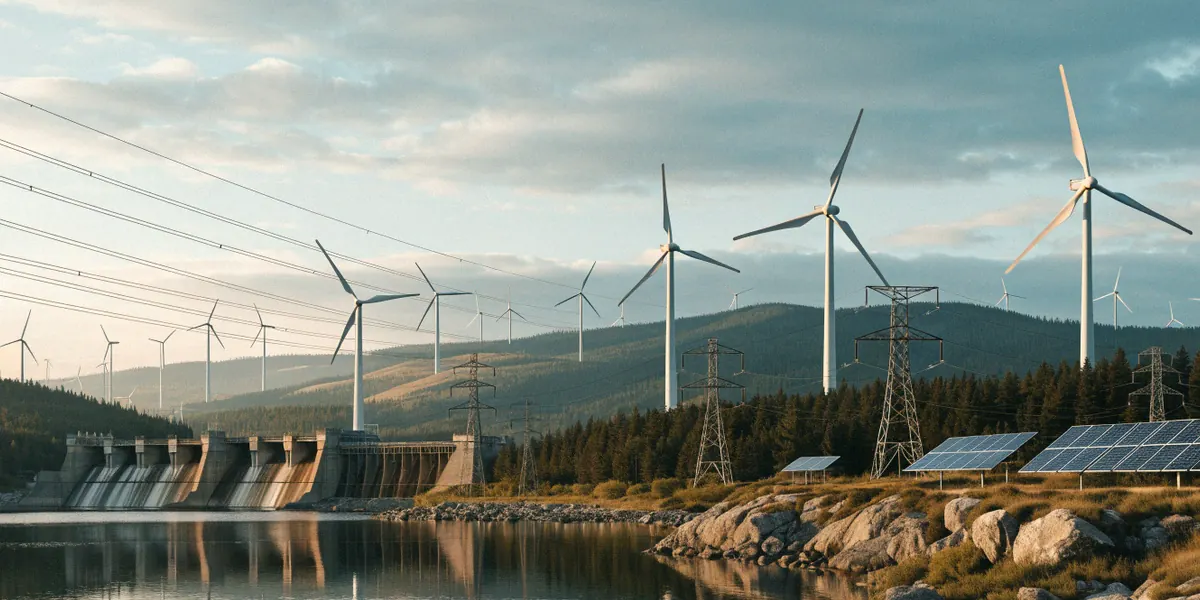
When we look at Canada’s energy mix, the story splits into two very different conversations: how we generate electricity, and how we produce and consume energy overall. On the electricity side, hydro, nuclear, wind, and solar do most of the heavy lifting. On the total energy side — which includes transportation, heating, and industry — oil and natural gas still dominate, and they will for the foreseeable future.
That’s not a talking point; it’s arithmetic. Canada is a vast, cold country with a resource-heavy economy, and we consume enormous amounts of energy to heat homes, move goods, and run industry.
Oil and Gas: The Backbone of Alberta’s Economy
Alberta oil is the engine of Canada’s energy sector. The province produces the majority of Canada’s crude oil and natural gas, and the revenue flows far beyond Alberta’s borders — to federal coffers, to Ontario manufacturers, to Quebec engineering firms, and to thousands of small businesses across the country. The Alberta oil sands alone are the third-largest proven oil reserves in the world, behind only Venezuela and Saudi Arabia.
Natural gas matters just as much. Canada is one of the world’s top natural gas producers, and LNG export projects on the West Coast are positioning us as a supplier to Asia — a market where Canadian gas could displace coal-fired power.
Hydroelectricity: The Quiet Giant
Hydroelectricity provides over 60% of Canada’s electricity generation — a fact that surprises almost everyone outside the country. Quebec, British Columbia, Manitoba, and Newfoundland and Labrador are essentially powered by rivers. Quebec’s James Bay complex is one of the largest hydroelectric systems on Earth.
Hydro is Canada’s quiet climate advantage. It’s renewable, low-carbon, and dispatchable — meaning it can ramp up and down to match demand, unlike solar and wind. When we talk about a clean grid, hydro is already doing most of the work.
Nuclear and Renewables: Growing but Not There Yet
Ontario relies on nuclear for roughly half its electricity, and refurbishments at Darlington and Bruce are extending that runway for decades. Wind and solar are the fastest-growing sources in absolute terms, but they still supply a small slice of total generation. Storage, transmission, and grid flexibility remain the bottlenecks.
The honest takeaway: renewables are growing fast, but they’re not yet at the scale needed to replace oil and gas in transportation, heavy industry, or petrochemicals. That’s the gap where enhanced oil recovery enters the conversation.
Alberta Oil: More Than Just Oil Sands
When people say “Alberta oil,” they usually picture the oil sands near Fort McMurray. But Alberta’s oil sector is more diverse than that — and the diversity matters for understanding where enhanced oil recovery fits.
Conventional Oil vs. Oil Sands: What’s the Difference?
Conventional oil flows naturally or with minimal stimulation. You drill a well, and crude comes up. These are the fields that built Alberta’s industry in the mid-20th century — places like Leduc, Redwater, and Pembina.
Oil sands are different. Bitumen is too thick to flow at room temperature, so it has to be mined or heated in place. It’s more energy-intensive and more expensive, but the reserves are enormous — which is why the oil sands are the third-largest proven reserves on the planet.
There’s a third category: tight oil, extracted from low-permeability rock using horizontal drilling and multi-stage fracturing. The Duvernay and Montney formations are prime examples.
How Waterflood Keeps Old Fields Producing
Here’s where enhanced oil recovery becomes practical. Most conventional fields in Western Canada are decades old. Primary recovery — letting oil flow on its own — typically captures only 10–20% of the oil in place. After that, production declines unless we intervene.
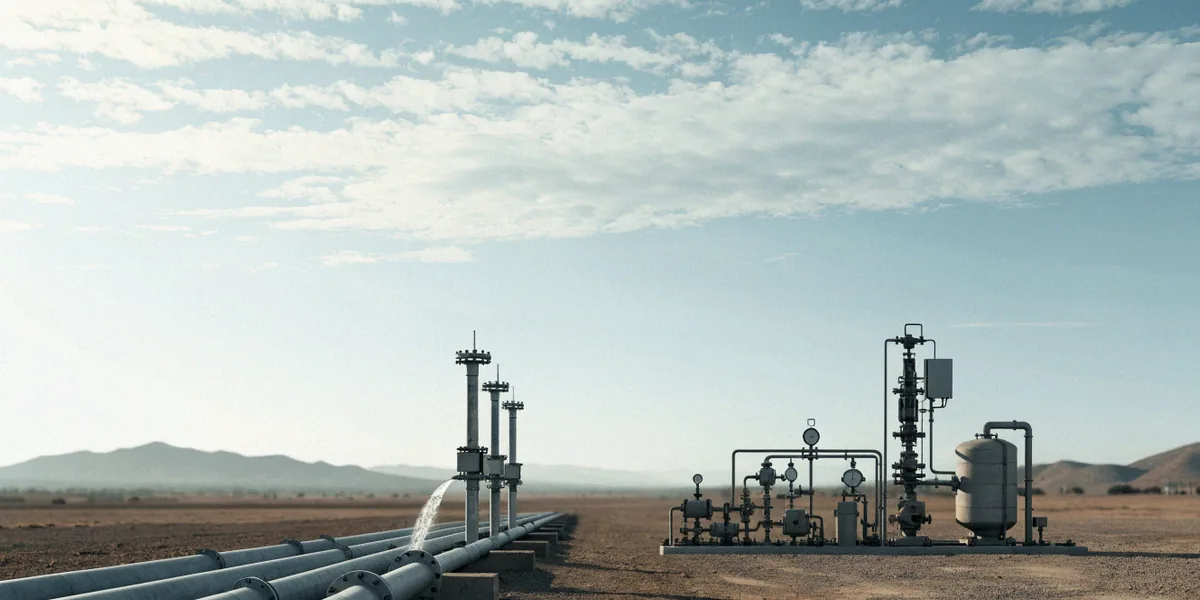
Waterflood is the most widely used enhanced oil recovery method in Western Canada. Operators inject water into the reservoir to maintain pressure and push oil toward producing wells. It’s simple, proven, and cost-effective. In some fields, waterflood has extended productive life by 20 or 30 years.
Cenovus and Suncor are major players in Alberta oil and EOR projects, and both have used waterflood and gas injection to squeeze more barrels out of mature reservoirs — barrels that would otherwise be abandoned.
Enhanced Oil Recovery: The Unsung Hero of Canadian Energy
Enhanced oil recovery (EOR) is any technique that goes beyond primary and secondary recovery to extract more oil from a reservoir. The goal isn’t just more production — it’s less waste. Every barrel recovered through EOR is a barrel that doesn’t require drilling a new well, building new infrastructure, or disturbing new land.
There are three main families of EOR:
- Waterflood and chemical flooding — injecting water, polymers, or surfactants to push oil through the reservoir.
- Gas injection — injecting CO2, natural gas, or nitrogen to mix with oil and improve flow.
- Thermal recovery — injecting steam to heat thick oil so it flows, most commonly used in oil sands.
EOR is critical because it lowers the carbon intensity per barrel. If you produce more oil from an existing well, you spread the emissions of drilling and infrastructure over more barrels. That math matters when Canada reports its climate progress.
Waterflood: The Most Common EOR Method in Canada
Waterflood is the workhorse of Western Canadian oil production. It’s used in thousands of wells across Alberta and Saskatchewan. Water is injected into the reservoir through dedicated injection wells, and it sweeps oil toward producing wells. Over time, operators adjust patterns, add polymers, or switch to CO2 to improve sweep efficiency.
It’s not glamorous, but it works — and it’s the reason many small Alberta towns still have a producing oilfield nearby.
CO2 Injection and Carbon Capture: A Win-Win?
CO2 injection is where EOR intersects with carbon capture. Instead of venting CO2 into the atmosphere, operators capture it from industrial sources — refineries, fertilizer plants, natural gas processing — and inject it into oil reservoirs. The CO2 helps mobilize oil, and a large portion of it stays permanently trapped underground.
Projects like the Quest facility near Fort Saskatchewan and the Alberta Carbon Trunk Line have demonstrated that this can work at scale. It’s not a silver bullet, but it’s one of the few tools that reduces emissions while producing energy.
Thermal Methods: Steam-Assisted Gravity Drainage (SAGD)
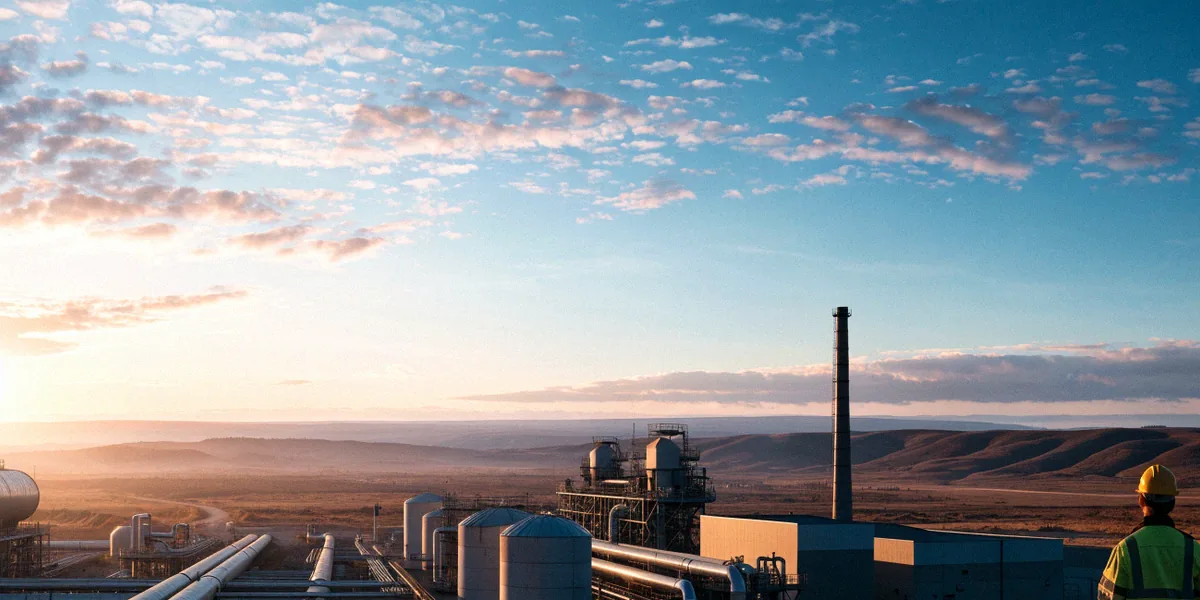
In the oil sands, SAGD is the dominant in-situ method. Two horizontal wells are drilled — one above the other. Steam is injected into the upper well, heating the bitumen so it drains by gravity into the lower well, where it’s pumped to surface. It’s energy-intensive, but it’s also improving. Cogeneration, solvent additives, and better steam-oil ratios have cut emissions per barrel significantly over the past decade.
The Energy Transition: Where Does EOR Fit?
Canada has committed to net-zero emissions by 2050. That’s a serious target, and it forces a serious question: what happens to oil production in the meantime?
Our view is pragmatic. Oil demand isn’t disappearing tomorrow. Even the most aggressive scenarios show Canada producing oil for decades. The question is whether we produce it with lower emissions — and EOR is part of that answer.
Can EOR Be Part of a Low-Carbon Future?
Yes, but with caveats. EOR reduces the emissions intensity of each barrel by extending field life and avoiding new development. It also enables CO2 storage. But it doesn’t eliminate the emissions from burning the oil. So EOR is a bridge technology, not a destination.
The debate over stranded assets is real. If the world transitions faster than expected, some oil reserves may never be developed. EOR projects with lower break-even costs and lower carbon intensity are better positioned to survive that transition.
The Role of Carbon Capture, Utilization, and Storage (CCUS)
CCUS is the policy darling of the moment, and for good reason. It’s the only scalable way to decarbonize heavy industry — cement, steel, chemicals, and oil refining. The federal government’s investment tax credit for CCUS is designed to accelerate deployment.
The Trans Mountain pipeline expansion aims to increase Canadian oil exports, and if those barrels are produced with lower carbon intensity, Canada has a stronger case in markets that care about emissions — like Europe and California.
What About Renewables? Not a Silver Bullet
We’re bullish on renewables, but we’re honest about their limits. Wind and solar can’t power a transcontinental trucking fleet, a petrochemical plant, or an airline. Hydrogen might, eventually, but the infrastructure isn’t there yet. Hydro is maxed out in most provinces — you can’t dam every river.
So the realistic path forward is a mix: renewables for electricity, nuclear for baseload, and oil and gas with lower emissions for everything else. EOR fits into that last category.
What This Means for Canadians
Energy policy isn’t abstract. It shows up in your heating bill, your job, and your grocery prices. Here’s how the mix connects to everyday life.
Jobs and the Economy: Not Just About Oil
Canada’s energy sector directly employs hundreds of thousands of people, and indirectly supports millions more. Alberta oil alone generates tens of billions in government revenue each year — revenue that funds healthcare, education, and infrastructure across the country.
But it’s not just about oil. Hydro projects in Quebec and Manitoba, nuclear refurbishments in Ontario, and renewable installations in the Prairies all create skilled trades jobs. The transition isn’t a zero-sum game; it’s a reallocation.
Energy Prices and Reliability
Provinces with abundant hydro and nuclear — Quebec, Ontario, BC, Manitoba — enjoy some of the lowest and most stable electricity prices in North America. Provinces that rely on natural gas for heating are more exposed to price swings.
Reliability matters too. When Texas froze in 2021, Alberta’s grid held — barely. Diversification isn’t just a climate strategy; it’s a resilience strategy.
Climate Commitments vs. Energy Reality
The federal carbon tax is designed to make high-emission energy more expensive and low-emission alternatives more competitive. It’s controversial, but it’s also the primary tool Canada has to hit its targets.
The tension is real. Canadians want climate action and affordable energy. We want to reduce emissions without gutting the economy. EOR, CCUS, and lower-carbon oil production are how we thread that needle — imperfectly, but pragmatically.
FAQ
What is enhanced oil recovery, in simple terms?
Enhanced oil recovery is a set of techniques used to extract more oil from a well after natural flow and basic pumping stop working. It includes waterflood, gas injection, and steam-based methods. The goal is to recover more of the oil that’s already in the ground rather than drilling new wells.
Why does enhanced oil recovery matter for Canada’s climate goals?
EOR lowers the carbon intensity per barrel by spreading emissions over more production and, in the case of CO2 injection, storing carbon underground. It’s not a solution to climate change on its own, but it’s a practical way to reduce the emissions footprint of oil we’re going to produce anyway.
Is waterflood still used in Canada today?
Absolutely. Waterflood is the most widely used enhanced oil recovery method in Western Canada. It’s been used for decades in Alberta and Saskatchewan and remains the backbone of mature field production.
What’s the difference between the oil sands and conventional oil?
Conventional oil flows naturally or with minimal stimulation. Oil sands contain bitumen, which is too thick to flow and must be mined or heated in place. The oil sands are the third-largest proven oil reserves in the world, but they’re more energy-intensive to produce.
Will Canada stop producing oil by 2050?
Probably not entirely. Most credible scenarios show Canadian oil production declining but not disappearing by 2050. The focus is shifting toward lower-carbon production, which is where EOR and CCUS come in. The transition is a slope, not a cliff.
Canada’s energy mix is complicated because Canada is complicated — a cold, vast, resource-rich country with world-class hydro, a growing renewables sector, and an oil industry that funds a huge share of public services. Enhanced oil recovery isn’t a cure-all, but it’s a practical tool that lets us produce Canadian energy with less waste and lower emissions while the transition unfolds. The smart path forward isn’t picking sides; it’s balancing production, affordability, and climate action — and being honest about the trade-offs at every step.


Post Comment